

Fully Guided Backpacking in the Chisos Mountains A Big Bend Adventure Guide

The Chisos Mountains rise from the Chihuahuan Desert like a stone fortress. One mile you are walking past sotol and prickly pear, and the next you are climbing into pine, oak, shaded canyons, and high overlooks that frame the Rio Grande country for miles.
A fully guided backpacking trip in the Chisos Mountains is one of the best ways to experience Big Bend National Park without juggling permits, route choices, water planning, and backcountry logistics on your own. A good guide helps set the pace, handles safety decisions, explains the desert ecosystem, and points out the views most hikers miss when they are staring at the trail.
This guide covers what a guided Chisos trip can look like, the key trails, what to pack, how to stay safe, where to photograph the best views, and how to choose local guide services near Big Bend.

Why choose a guided backpacking trip in the Chisos Mountains
The Chisos are beautiful, but they ask for respect. Trails climb fast. Shade can be limited. Water is scarce. Weather can swing from crisp mountain air to hot exposed ridges in the same day.
A guided trip removes much of the friction. Instead of guessing which route fits your group, a guide builds a plan around mileage, fitness, season, campsite availability, and current trail conditions. On the trail, they help with navigation, pacing, food storage, wildlife awareness, and Leave No Trace habits.
A guide also brings the place to life. The Chisos are more than a backdrop. They are home to Mexican jays, black bears, mule deer, century plants, alligator juniper, and fossils in the wider park. With a skilled local guide, the hike becomes part trail journey, part field lesson, and part desert survival course.
Best reasons to go guided
You are new to backpacking and want a safer first overnight trip.
You want to hike the South Rim without planning every detail.
You are traveling from far away and need help with permits and timing.
You want local knowledge about wildlife, weather, and photography spots.
You prefer carrying less uncertainty into a remote national park.
A sample three-day guided Chisos itinerary
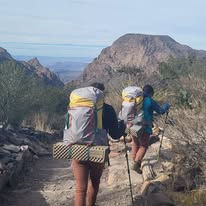
Every outfitter designs trips differently, and park rules or weather may change a route. Still, many guided Chisos backpacking itineraries follow a classic loop from Chisos Basin into the high country, with a South Rim sunrise or sunset as the emotional center of the trip.
Day | Route focus | What makes it memorable |
Day 1 | Chisos Basin to the high camps | Steady climbing, mountain air, first views into Boot Canyon |
Day 2 | South Rim and optional Emory Peak | Big overlooks, golden light, the best photography of the trip |
Day 3 | Return by Laguna Meadow or Pinnacles | Long views, desert descent, a satisfying loop finish |
Day 1 climbs from Chisos Basin into the mountains
Most trips begin in Chisos Basin, the natural launch point for many high-country routes. After a gear check, permit review, and group briefing, the trail usually climbs toward the Pinnacles Trail or Laguna Meadow Trail.
The Pinnacles Trail is steeper and more direct. It gains elevation quickly through oak and juniper, with rocky switchbacks and wide views back toward the Basin. It is a strong choice for groups that want a classic mountain ascent.
The Laguna Meadow Trail has a steadier grade and often feels more gradual, though it still demands effort with a loaded pack. It passes through open slopes, woodland pockets, and broad mountain terrain before reaching the higher camps.
Guides often choose campsites near Boot Canyon, the Colima Trail, or other designated Chisos backpacking sites, depending on permit availability. At camp, expect instruction on tent setup, stove use, food storage, and evening routines. Nights in the Chisos can be intensely quiet, with stars filling the sky above the dark outline of the rim.
Day 2 explores the South Rim and Emory Peak
The second day is the heart of many guided Chisos trips. The South Rim Trail leads to one of the finest viewpoints in Texas. The land drops away in huge folds of desert, canyons, ridges, and distant Mexican mountains. It is the kind of view that stops conversation.
A guided group may time the South Rim for sunrise, sunset, or the softer light of late afternoon. The rim is also a prime place to learn about desert geology, weather patterns, and the fragile high-country ecosystem.
Some itineraries include an optional side trip to Emory Peak, the highest point in Big Bend National Park. The final section involves a short, exposed rock scramble that is not for everyone. Guides help decide whether the side trip fits the group, the weather, and the available daylight.
If Emory Peak is not part of the plan, Day 2 can still feel full. Boot Canyon, the Colima Trail, and the rim viewpoints offer plenty of mileage and scenery without adding the scramble.

Day 3 returns to Chisos Basin
The final day usually completes the loop back to Chisos Basin. If the group climbed via Pinnacles, the descent may follow Laguna Meadow. If the group came up Laguna Meadow, the return may use Pinnacles, depending on conditions and guide preference.
This last stretch can be surprisingly scenic. The high country gives way to desert plants, warmer air, and broad views into the Basin. Legs are tired, packs are lighter, and the route offers one last chance to spot deer, birds, and blooming cactus in season.
Back at the trailhead, most guided trips end with a gear sort, a water refill, and a well-earned meal in the Big Bend region.
Key trails that define the Chisos experience
A fully guided backpacking in the Chisos Mountains route often links several of the park’s signature trails. Knowing the character of each one helps set expectations.
The Pinnacles Trail feels steep and dramatic
Pinnacles climbs hard from Chisos Basin and quickly delivers mountain views. It is rocky, direct, and rewarding. This trail often feels like the “earning it” section of the trip.
The Laguna Meadow Trail gives a gentler mountain approach
Laguna Meadow is not easy, but many hikers find its grade more forgiving. It moves through open habitat and woodland sections, with space to settle into a steady pace.
The Colima Trail connects the high country
Colima serves as a useful connector between the Laguna Meadow side and the Boot Canyon side of the Chisos. It is less famous than the rim trails, but it helps make loop routes work.
The Boot Canyon Trail offers shade and texture
Boot Canyon is one of the most varied parts of the high country. Depending on season and recent weather, it may hold pockets of shade, birds, and interesting plant life. Do not count on water here unless a guide has confirmed current conditions.
The South Rim Trail delivers the big payoff
The South Rim is the view many hikers dream about before they arrive. It is wide, wild, and humbling. On a clear day, the desert seems to stretch without end.
What to pack for a guided Chisos backpacking trip
A guided trip does not mean you can pack casually. The Chisos are remote, and even supported trips require smart personal gear. Your outfitter should provide a detailed packing list, but these are the essentials most backpackers need.
Core backpacking gear
A fitted backpack with enough capacity for overnight gear
Lightweight tent or shared shelter, if not provided
Sleeping bag rated for expected nighttime temperatures
Sleeping pad with good insulation
Headlamp with fresh batteries
Trekking poles for steep climbs and descents
Clothing for desert mountains
Moisture-wicking hiking shirt
Warm layer for evenings and mornings
Lightweight rain shell
Hiking pants or shorts suited to brush and sun
Sun hat and warm beanie
Extra socks
Broken-in hiking boots or trail shoes with strong traction
Food and water gear
Water bottles or reservoir with enough capacity for the route
Electrolytes for hot days
Personal snacks for steady energy
Compact bowl, mug, and utensil if meals are provided
Water treatment backup, even if the group expects to carry water
Small items that matter
Sunscreen and lip balm
Sunglasses
Personal first-aid items and medications
Blister care
Toilet kit and sealable waste bags
Small power bank for phone or camera
Map or offline trail app as a backup, even on a guided trip
Do not rely on natural water in the Chisos unless your guide and the park have confirmed current conditions. Many trips require carrying all needed water.
The best packing tip is simple: bring what your guide requests and leave the extras behind. Heavy packs make the climb harder, slow the group, and increase the risk of sore knees, blisters, and fatigue.

Safety precautions and wildlife awareness
Big Bend rewards prepared hikers. It can punish careless ones. A guided trip adds a layer of safety, but each person still has a role to play.
Heat and dehydration are serious risks
Even in the mountains, the sun can be intense. Start hydrated, sip often, and tell the guide early if you feel dizzy, nauseated, chilled, or unusually weak. Heat illness can build quickly.
Guides may adjust start times to avoid the hottest part of the day. They may also slow the pace, add shade breaks, or shorten side hikes. Those calls protect the group.
Weather can change the plan
The Chisos can bring wind, sudden storms, cold nights, and exposed ridgelines. Lightning is a real concern near high points and rims. A good guide watches the sky and changes the route when needed.
Pack rain gear even if the forecast looks dry. Desert storms do not need to last long to soak clothing or make rocks slick.
Wildlife encounters require calm behavior
Black bears live in the Chisos. Mountain lions also move through the park, though sightings are less common. Javelinas, snakes, scorpions, and other desert animals may appear near trails or camps.
For black bears:
Keep food and scented items stored properly.
Never feed wildlife.
Give bears plenty of space.
Make yourself known if you surprise one.
Follow your guide’s instructions immediately.
For mountain lions:
Do not run.
Stay together as a group.
Make yourself look larger.
Keep children close.
Back away slowly if directed.
For snakes:
Watch where you place hands and feet.
Use a headlamp at night.
Step around rocks and logs with care.
Never try to move or photograph a snake closely.
Most wildlife wants distance. Respect that distance and encounters often become memorable rather than dangerous.
Navigation and permits still matter
Big Bend requires backcountry permits for overnight trips. Designated Chisos campsites are limited, and demand can be strong during cooler seasons. Many guided services help with permit planning, but confirm who handles the reservation and what happens if your preferred route is unavailable.
Carry identification, know the group plan, and keep emergency items accessible rather than buried deep in your pack.
The best scenic viewpoints and photography spots
The Chisos are made for photography, from wide desert vistas to small details like agave leaves, weathered rock, and Mexican jay feathers flashing blue in the trees.
The Window frames classic Big Bend light
The Window is one of the park’s most famous views, especially near sunset when the desert beyond the Basin glows. Many guided backpacking trips begin or end near Chisos Basin, making this an easy add-on before or after the overnight route.
South Rim is the essential wide shot
Bring a wide-angle lens or use your phone’s panorama mode with care. The South Rim works best when the light comes in low from the side, often early or late in the day. Include a hiker or foreground rock to show scale.
Boot Canyon rewards slower looking
Boot Canyon is a strong place for detail shots. Look for textured bark, canyon walls, shaded trail scenes, and birdlife. A small zoom lens helps, but patience matters more than gear.
Emory Peak gives a summit perspective
If your group climbs Emory Peak, secure your camera before the scramble. The summit view is powerful, but the final rocks require both hands and full attention.
Laguna Meadow catches soft evening color
Open terrain along Laguna Meadow can glow beautifully near dusk. The mix of grasses, trees, and distant ridges gives photographers layered compositions without needing to stand near an edge.

When to go and how to prepare
The most comfortable backpacking seasons in Big Bend are usually the cooler months, especially fall through spring. Summer heat can be extreme, and many guided backpacking itineraries become unsafe or impractical during the hottest periods.
Book early if you are aiming for holidays, spring break, or peak cool-weather windows. Campsites in the Chisos are limited, and guided services may fill well in advance.
Training does not need to be complicated. In the weeks before the trip, hike with a loaded pack, walk hills or stairs, and test your footwear. Practice drinking regularly while moving. If you are not used to desert air, plan an easier first day in the region before starting the backpack.
The Chisos Mountains do not hand out easy miles, but they give back more than they take. With the right guide, a smart pack, and respect for the desert, a backpacking trip here becomes more than a route on a map. It becomes a close look at one of the wildest mountain islands in the American Southwest.

Comments